

Why Your Next Dog Walk Should Be a Sniffari


We often measure the success of a walk by how many miles were covered, how fast the pace was, and whether our dog maintained a perfect heel. We’ve been taught that a tired dog is a happy dog, but we rarely stop to ask what kind of tired we’re aiming for.
The goal of walking your dog isn’t just to drain their physical energy, but to truly satisfy their needs. If you spend the entire walk pulling them away from every blade of grass, expecting them to keep up with a brisk human pace, it’s like taking them to a museum and forbidding them to look at the exhibits.
To give your dog the best experience, you must shift your focus from a physical “workout” to incorporating mental enrichment and their natural instincts into your routine. How can you do this? By taking your pup on a “sniffari!”
Let’s look at what a sniffari is and how you can start enjoying this fun form of exercise with your dog today…
Disclosure: PetGuide may receive a small affiliate commission from purchases made via links in this article, but at no cost to you.
The Biological Need to Sniff
To understand why a “sniffari” is so transformative for your dog, you first have to appreciate how complex a dog’s nose actually is. While we navigate the world around us primarily through sight, our dogs experience a unique, four-dimensional map made entirely of scent. For a dog, sniffing isn’t just a hobby; it’s their primary method of gathering data, processing emotions, and communicating with the world around them.
There are significant differences between dogs and humans in terms of their sense of smell. While we have roughly 6 million olfactory receptors, which may sound like a lot, dogs have up to 300 million, depending on the breed.
Here are some other fun facts:
- Dedicated Brain Power: A dog’s brain has a disproportionately large area, about 40 times larger than ours, relatively speaking, dedicated solely to analyzing smells.
- Separation of Air: When a dog inhales, a fold of tissue inside the nostril separates the air into two distinct paths: one for breathing and one specifically for smelling.
- Exhaling to Inhale: Dogs can sniff almost continuously. Their nostrils are designed to exhale through the side slits, which actually creates a swirl of air that helps pull new scent molecules into the nose.
Dogs also possess a specialized tool called the vomeronasal organ (or Jacobson’s organ). Located in the roof of the mouth, this organ allows them to detect chemical signatures, such as pheromones, that aren’t visible to the naked eye. Through this organ, they can tell if another animal passed by an hour ago, what the animal’s sex is, what they ate, and even what kind of “mood” they were in at the time.
This is why your dog may spend three minutes investigating a single fire hydrant. They aren’t just smelling pee; they are reading a complex community bulletin board shared by your local dog community.
Sniffing and Mental Health
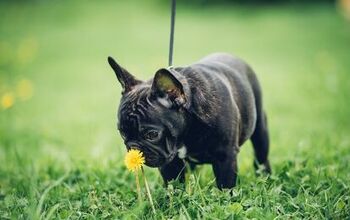
Because so much of your dog’s neurology is tied to scent, preventing a dog from sniffing is a serious form of sensory deprivation. When we allow them to lead with their noses, we engage this special “second brain,” which plays an important role in maintaining their mental health.
- Lowering Cortisol: Studies have shown that the act of sniffing lowers a dog’s pulse and reduces cortisol levels. It shifts them from a state of high alert (visually scanning their surroundings) to a state of focused relaxation (processing through scent).
- Natural Instinct: Foraging and scent-trailing are hardwired behaviors for dogs. Providing an outlet for these instincts allows them to meet their biological needs in a safe and positive way.
By honoring your dog’s biological “must-haves,” you can move away from viewing your walks as a chore and start seeing them for what they are: an opportunity to prioritize your pup’s health and well-being.
Why Physical Exercise Isn’t Enough
The old saying, “a tired dog is a good dog,” leads many of us to believe that a high-intensity game of fetch or a brisk three-mile run is the gold standard for meeting your dog’s needs. While physical movement is certainly important, it’s actually only one piece of the puzzle. If we rely solely on physical exercise, we may actually be doing our dogs a disservice.
When a dog engages in high-arousal activities, like sprinting after a ball or running alongside a bicycle, their body is flooded with adrenaline and cortisol. This can be fun in moderation, but it keeps the dog in a “high-alert” sympathetic nervous system state. It has short-term benefits, but it isn’t a state we want our dogs to live in.
- The “Athlete” Paradox: the more we purely physically exercise our dogs, the more stamina they build. Eventually, you end up with a “super-athlete” dog who requires two hours of running just to reach a baseline of calm.
- Adrenaline Hangover: It can take hours, or even days, for a dog’s stress hormones to return to baseline after an intense session of high-arousal play. This can contribute to behavioral challenges like reactivity.
- Physical Wear and Tear: Constant high-impact activity can lead to joint issues and repetitive strain injuries, especially as our dogs age.
In contrast, a scent-led walk taps into the parasympathetic nervous system, allowing your dog to “rest and digest.” Exploring and deciphering a scent trail is like the canine equivalent of solving a difficult calculus problem or reading a challenging piece of literature.
Mental fatigue is deeper. Have you ever felt exhausted after a long day at a demanding job, even if you sat at a desk? That is cognitive fatigue. For a dog, 15 minutes of intense sniffing can be more tiring, and significantly more satisfying, than an hour of mindless walking. Additionally, it’s a self-soothing behavior that helps to calm any stress or anxiety they may be experiencing, improving their emotional health.
On a standard walk, you might cover two miles in 30 minutes. On a sniffari, you might only cover two blocks in the same time. From a quality-of-life perspective, those two blocks are far more valuable.
Finding the Balance
This doesn’t mean we should stop playing or moving. Our dogs do have physical exercise needs that we shouldn’t ignore. But it does mean we should shift our thinking about what makes a “successful” walk.
The ultimate goal of a sniffari is to act as a form of decompression. The best sniffaris involve a walk in a quiet, natural area on a long leash where your pup can simply “be a dog.” Instead of focusing on your step count or your pace, focus on your dog’s engagement. When they stop to investigate a scent, wait with them. You’ll notice they often take a deep breath after a particularly long sniff. That is the sound of a dog finding peace.

Tips for a Successful Sniffari
Transitioning from a standard, structured walk to a sniffari will require some changes both in gear and your mindset. While it sounds as simple as letting them smell, a few intentional choices can significantly improve the quality of the experience for both you and your pup.
The Essential Gear
The right equipment allows your dog to have the freedom to sniff and explore without compromising safety or your ability to communicate with one another. This includes:
- A Well-Fitted Harness: Avoid collars or no-pull harnesses that tighten around the chest or armpits. A Y-shaped harness allows a full range of shoulder motion, helping prevent injuries. It will also ensure that if your pup hits the end of the leash while following a scent, the pressure is distributed safely across their body rather than solely on their delicate neck. A good example is the Ruffwear Front Range Harness.
- The Long Line (10-15 feet): A standard 6-foot leash often creates accidental tension. A longer lead gives your dog a buffer zone, allowing them to follow a scent trail into the grass without your having to step off the path. Avoid retractable leashes, as they maintain constant tension throughout the walk. A Biothane longline is great for easy cleaning.
- High-Value Rewards: Even though sniffing is the primary reward, you should keep some small, nutrient-dense treats on hand to reward your dog when they check in or to safely redirect them if they find something they shouldn’t. My pups love single-ingredient treats like the Vital Essentials Freeze Dried Dog Treats.
Choosing the Right Location
While you can turn your neighborhood walk into a sniffari, you should consider changing up the experience to keep your dog interested and engaged. Try visiting new neighborhoods, as smelling new dogs and environments is like reading a brand-new novel.
If you have access to nature trails, parks, and wooded areas, they are a great option. These offer a variety of wildlife scents, such as squirrels, deer, rabbits, and birds, that are deeply engaging for your dog’s predatory instincts. However, ensure you are always in control to prevent your pup from chasing or injuring anything.
Do you live in a city? Try looking for quiet parks or even visiting a local garden center where there are many organic smells.
Your Role as a Handler
Your job during a sniffari is to be a silent partner and careful observer. It requires a level of mindfulness that is not only beneficial for your pup but also quite therapeutic for us.
If your dog wants to spend five full minutes investigating one specific square inch of a tree trunk, let them. They are processing a massive amount of data. Practice keeping the leash slack. Tension on the leash travels straight to your dog’s nervous system and can snap them out of their focused “rest and digest” state.
Follow the lead, within the bounds of safety, of course. Let your pup choose the direction. If they want to turn left toward a patch of clover, follow them.
Managing Expectations and Safety
While your dog is head-down, you should be head-up. Continuously scan your surroundings for potential hazards like broken glass, discarded food, or approaching off-leash dogs. If you do live in a place where off-leash dogs are a real concern, you may want to carry something to protect your pup (especially if they aren’t dog-friendly). I always have a Pet Corrector on hand as a safety precaution.
It’s helpful to have a gentle verbal cue to signal when it’s time to move on, rather than physically pulling your dog away from an interesting scent. With my pups, I use a soft “Let’s go” and follow it up with a treat. This will encourage them to keep moving, while the positive association increases the chance that they will listen again next time.
Redefining a Successful Walk
As we strive to give our pups the most vibrant, healthy lives possible, we need to remember that wellness is not a one-size-fits-all consideration. A long-fast walk might check a box on your fitness tracker, but a sniffari will fill a much deeper need for your dog. By shifting our perspective and viewing the experience through our dog’s eyes, we can provide them with the mental fulfillment they crave.
The simplest way to improve your dog’s life is often the most natural: let them be a dog. Whether you live in a bustling city or a quiet cabin in the woods, prioritizing a scent-led walk is a gift that your dog will thank you for. Next time you grab the leash, let their nose lead the way! You might be surprised at how much more satisfied (and truly tired) your pup will be when you’re finished.
Join the PetGuide community. Get the latest pet news and product recommendations by subscribing to our newsletter here.
Britt Kascjak is a proud pet mom, sharing her heart (and her home) with her “pack” which includes her husband John, their 2 dogs – Lucifer and Willow – and their 2 cats – Jinx and Theia. She has been active in the animal rescue community for over 15 years, volunteering, fostering and advocating for organizations across Canada and the US. In her free time, she enjoys traveling around the country camping, hiking, and canoeing with her pets.
More by Britt